-
Empty cart
No products in the cart.
Return to Shop
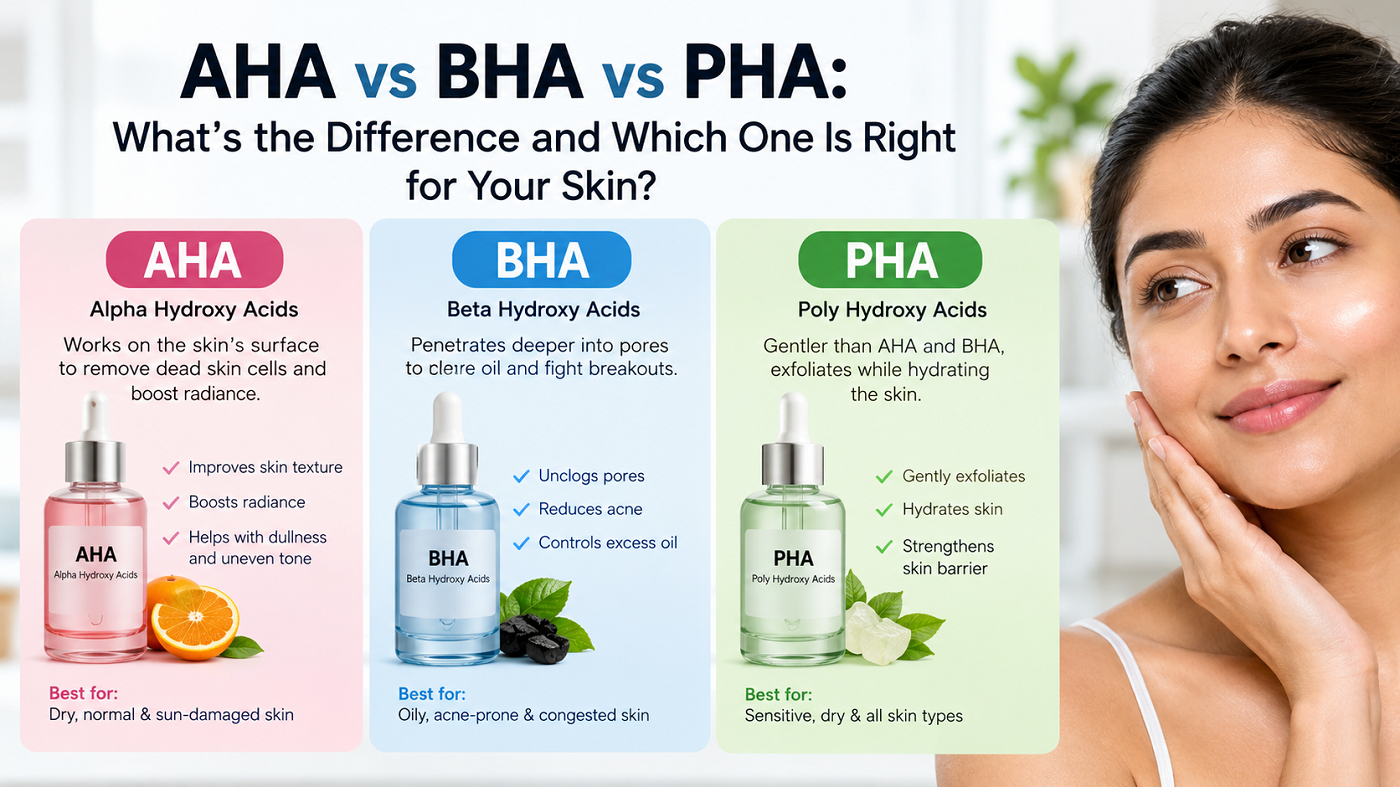
Sometimes, skin care can be a hectic task. It’s like you are learning something new every day. You just grab a bottle of toner and notice bold letters, such as AHA, BHA, or PHA, and ask yourself what they even mean. The reality is, knowing the difference between AHA vs BHA vs PHA is one of the simplest methods to up your skin care game. With knowledge of how each works, selecting the right product is easy, not stressful.
These three are all forms of chemical exfoliants that skin care enthusiasts employ to slough off the dead skin cells and expose the new and smooth skin below. They do it very differently. Let’s take everything apart and explain it in simple terms.
What is the meaning of Exfoliation?
The skin is constantly shedding dead skin cells. However, this process slows down as we get older or when our skin is dry and dull. Dead cells build up, pores become clogged, and skin may begin to appear flat or rough.
Chemical exfoliants help to soften the “glue” that binds dead skin cells to one another, allowing them to shed more quickly. No scrubbing needed. This is unlike a physical scrub, which physically scrapes off dead skin.
What is the AHA for skin?
AHA is short for Alpha Hydroxy Acid. It is water-soluble and therefore works primarily on the surface of the skin.
Common types of AHA are:
- Glycolic acid – has the smallest molecules, which means it works quickly and deeply to smooth and brighten.
- Lactic acid – is gentler, exfoliates and provides hydration.
- Mandelic acid – has larger molecules, so it works slowly and gently, great for sensitive or darker skin tones
Benefits of AHA
- Brightens dull skin
- Smooths rough texture
- Fades dark spots and pigmentation
- Softens fine lines
- Adds a healthy glow
AHA is ideal for normal to dry skin. It is best for anyone who is suffering from dullness, uneven tone, and early signs of ageing.
What is BHA for Skin?
BHA is short for Beta Hydroxy Acid. It is oil-soluble, unlike AHA. This will allow it to penetrate the pores where oil accumulates and clear the pores from the inside.
Salicylic acid is the most popular BHA in skin care. It is a popular ingredient for people with acne as it can penetrate into the pores that surface exfoliants can’t reach.
Benefits of BHA for skin:
- Unclogs pores from the inside
- Clears acne.
- Diminishes blackheads and whiteheads.
- Soothes redness and inflammation
- Controls excess oil
- Prevents new acne from forming.
- Prevents new acne breakouts.
BHA is typically a friend of yours when you have oily skin or suffer from acne outbreaks. It’s also soothing for sensitive skin, which is a plus for those prone to breakouts.
What is PHA for Skin?
PHA is a Polyhydroxy Acid. It’s like the nice brother of AHA. It has much larger molecules and therefore cannot penetrate deeply. Rather, it only functions on the top layer of skin.
The different types of PHA for skin are gluconolactone and lactobionic acid.
Benefits of PHA for Skin
- Gently exfoliates without harsh irritation
- Moisturizes skin during activity
- Supports the skin’s natural barrier function.
- Reinforces the barrier function of the skin.
- Appropriate for everyday use, even by novices
- Great for sensitive or reactive skin!
PHA is a safe option to begin with if you have sensitive skin or haven’t used a chemical exfoliant before.
Comparison Table: AHA vs BHA vs PHA. Which one is right for you?
This is a simple table that shows the differences between AHA, BHA, and PHA.
| Feature / Attribute | AHA | BHA | PHA |
|---|---|---|---|
| Solubility | Water-soluble | Oil-soluble | Water-soluble |
| Works on | Skin surface | Inside pores | Very top layer only |
| Best for | Lack of brightness, wrinkles, spots | Acne, oily skin, clogged pores | Sensitive skin, beginners |
| Irritation level | Moderate | Low to moderate | Very low |
| Hydrating? | Sometimes (lactic acid) | No | Yes |
| Can be used daily? | No, 2-3x a week | No, 2-3x a week | Often yes, it’s gentle |
Which One is the Best for You? AHA, BHA or PHA?
Choosing between them comes down to your skin type and main concern:
- Skin that is dull, uneven, or showing signs of aging → Use an AHA such as glycolic or lactic acid.
- Oily skin, blackheads, or acne → Pick up a product with BHA, such as salicylic acid.
- Gentle, reactive, or new skin → Use a PHA for gentle effects.
- Combination skin with multiple problems → Alternate use of AHA and BHA may be effective.
Can You Use Chemical Exfoliants (AHA, BHA, PHA) Together?
No. You should not use all the acids together.
If you use them, then use them with a bit of caution. Avoid using too many strong acids simultaneously, as this can irritate the skin and compromise its barrier.
A few simple rules before using AHA, BHA, or PHA on the skin.
- Try one acid and note the reaction of the skin.
- Use more than one if desired, switching them up on different days.
- Sunscreen should be used every day, as all three acids can increase skin sensitivity to the sun.
- Do not use strong acids and retinol together at night.
Final Verdict: Which Acid is Best for You?
So, when it comes to AHA vs BHA vs PHA, there isn’t one that’s better than the others. Each of them provides a different solution.
- AHA polishes and gives a glow to the surface.
- BHA unclogs pores and helps to soothe acne.
- PHA is a gentle exfoliant, ideal for sensitive skin.
Knowing your own skin is the best guide to exfoliation. Go slowly, see how your skin reacts, and choose the acid that’s right for you.
If you have the right one and a little patience, smoother and healthier skin is within reach.
FAQs about AHA vs BHA vs PHA
- Is Glycolic acid an AHA or BHA?
Glycolic acid is an AHA. It’s water-soluble and works on the surface of the skin, making it great for brightening and smoothing texture.
- Which acid is the most suitable for beginners?
PHA is the least aggressive and is an excellent place to start. When using AHA or BHA, use a low concentration.
- Can I use AHA, BHA and PHA together?
You can, but it’s best to use them on different days not to irritate your skin.
Also, it is advisable to use sunscreen with these acids.
- Should I use sunscreen daily?
Yes, always. Daily SPF is essential, as all three acids can make skin more sensitive to the sun.
- What is the best acid to use for acne and oily skin?
The best one is BHA, particularly salicylic acid. It works on oily clogged pores, unclogging blackheads and acne from the inside.