-
Empty cart
No products in the cart.
Return to Shop
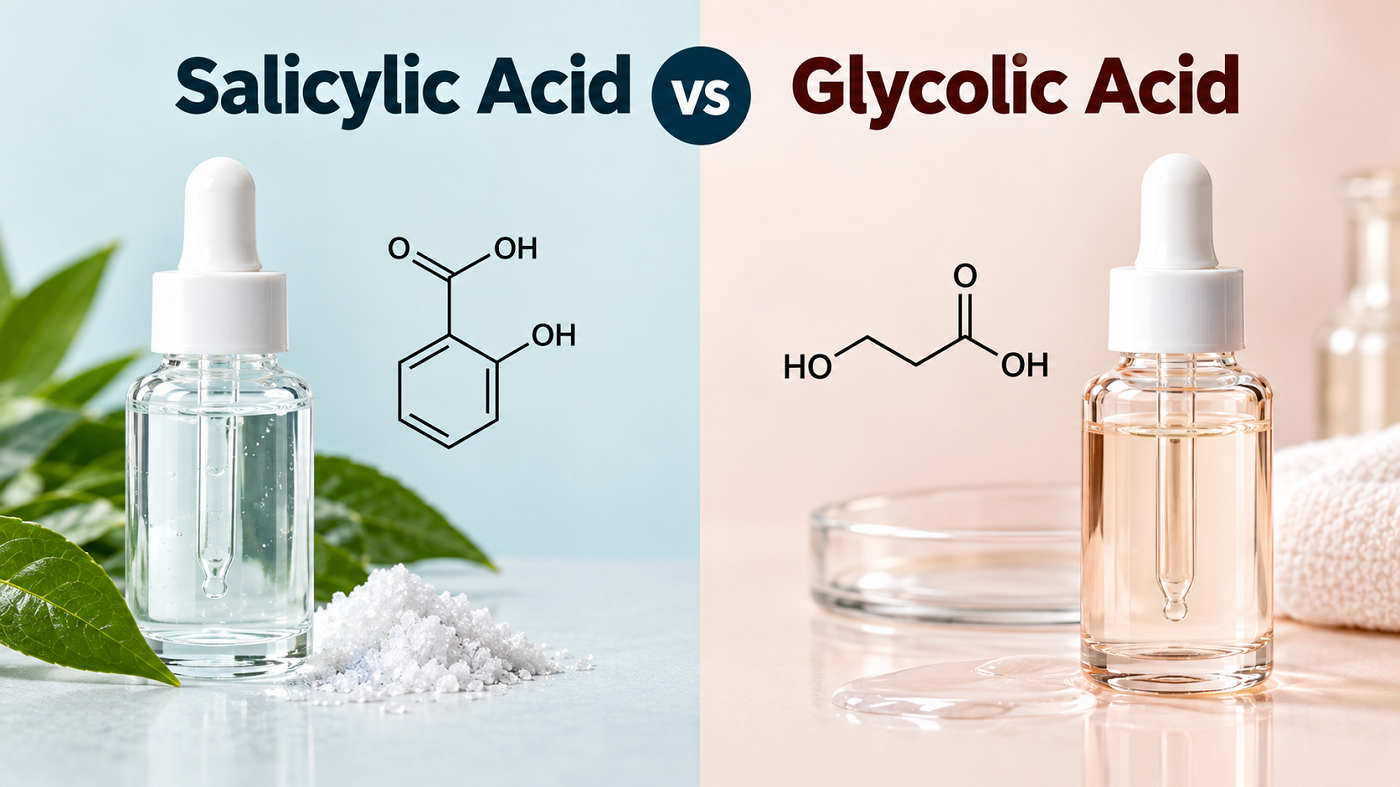
If your skin has been feeling off lately due to humid weather, you might know the side effects. It begins with minor redness, turns into pimples, and eventually becomes cystic acne. The stubborn pimples require a permanent solution. So, here it is. The ultimate battle between salicylic acid and glycolic acid.
This guide helps you choose the best option for your skin concerns. Not only that, but you might also discover some hidden benefits of these facial acids. Both salicylic acid and glycolic acid work best for acne marks left behind, dark spots, and hyperpigmentation. However, which acid suits which skin types and how to use them safely is the ultimate step.
Millions of people are looking for answers every single day on salicylic acid vs. glycolic acid and want to find their skin solution. Here’s the good news: both of these ingredients can help. So, let’s dive into the differences between glycolic acid and salicylic acid, and help you decide which one is best for you.
What is Salicylic acid?
Salicylic acid is an exfoliant for acne-prone skin. It gently removes dead skin cells, acne marks, and pus-filled pimples.
Being an exfoliant, it helps in the process of sloughing off the dead skin cells on the surface of your skin.
Salicylic acid is special because it is oil-soluble. This means that it can be dissolved in oil. Your skin has open pores which are full of oil. This oil is called sebum. Salicylic acid gets inside these pores and disintegrates dirt, oil, and dead skin cells trapped within.
That’s why salicylic acid is sometimes referred to as a “deep cleaning” ingredient. It’s not just on the surface of your skin. It takes you to where the problems begin.
Benefits of Salicylic Acid for Skin
Salicylic acid is known for its many benefits, such as:
- It primarily clears out clogged pores that are loaded with dirt and dust.
- Salicylic acid naturally clears up blackheads and whiteheads
- It has anti-inflammatory, soothing, and calming qualities that reduce redness and swelling.
- Salicylic acid helps prevent new pimples from forming
- It is ideal for oily skin care as it regulates excess oil.
- Salicylic acid is safe to use for most people.
Uses of Salicylic acid
Did you know salicylic acid works for oily and acne-prone skin really well? To be precise, it is best suited for:
- Acne and breakouts
- Blackheads and clogged pores.
- Oily or acneic skin
- Acne on the body (on the back or chest)
Who Should Use Salicylic Acid for Skin?
Not all acids are suitable for all faces. These are the people who will benefit the most from salicylic acid:
- Oily skin sufferers
- Those who suffer from acne regularly.
- Individuals who have big or blocked pores
- Individuals with blackheads on their nose or chin.
For skin that feels greasy by midday, salicylic acid face wash may be your new best friend.
What is Glycolic Acid?
Glycolic acid is another exfoliant for skin that eliminates darkness, dull patches, and dead skin cells. It has a different effect on your skin. It is a water-soluble exfoliant and remains predominantly on the surface of your skin.
Glycolic acid is derived from sugar cane and is the smallest molecule of the common acids found in skin care products. The molecules are very small and can easily pass between the cells of the skin. This helps to separate the “glue” that is stuck between the dead skin cells, and they will fall away faster.
So, what is the result of glycolic acid? Well, it gives smoother, younger-looking skin, which may appear brighter almost immediately.
Benefits of Glycolic Acid for Skin
On the other hand, Glycolic acid offers numerous benefits. Let’s check them:
- Glycolic acid brightens dull-looking, textured skin
- It smooths rough texture and bumpy skin.
- The best glycolic acid face serum fades dark spots and pigmentation over time
- It increases collagen production in the skin, which may help to diminish fine lines.
- Glycolic acid face serum for skin also assists other skin care products in absorption.
- It adds a natural lustre to the skin
Uses of Glycolic Acid
Known for its exfoliating nature, glycolic acid is ideal for dry, normal and combination skin. Glycolic acid is best for:
- Lack of luster and color in the skin.
- Dark spots and pigmentation
- Fine lines and signs of ageing
- A surface that is not smooth.
Who Should Use Glycolic Acid?
Glycolic acid is effective for:
- Those who have dry skin treatment needs (yes, exfoliation can help dry skin look smoother)
- Those who have dull or tired skin.
- Those who have dark spots or pigmentation
- Those looking for a more even and luminous complexion.
But here’s the catch. Glycolic acid may be too harsh for sensitive skin. It can instantly sting, redden, or peel if applied too frequently. So, always do a patch test.
Salicylic Acid vs Glycolic Acid: The Ultimate Differentiation Guide
Both salicylic acid and glycolic acid work great on different skin types. But, here’s a guide for beginners to understand the difference between the two.
| Feature | Salicylic Acid | Glycolic Acid |
| Primary Benefit | Tackles pimples, acne, and clogged pores | Reduces dullness and pigmentation |
| Ideal For | Oily, Acne-Prone Skin | Dry, Normal and Combination skin |
| Texture | Serum-like, oil-soluble (BHA) | Lightweight, water-soluble (AHA) |
| Skin Feel | Gentle and potent | Quite strong, tingling sensation |
| Sensitive Skin Tolerance | Sometimes, Yes | Always use with caution |
| Targets | Unclogs pores, eliminates blackheads, whiteheads, and pimples. | Works on skin surface, clears dead skin cells, and smooths the skin |
The main difference is that salicylic acid is effective at cleaning from within your pores. Glycolic acid is effective on the surface of your skin. It’s not always “better” than the other. This will rely on the requirements of the skin.
Why Salicylic Acid & Glycolic Acid are Good for Skin Concerns?
Imagine that your skin is a house. If the pipes (pores) are clogged, it’s an inside problem.
- Salicylic acid is similar to a plumber who comes in and unclogs the blockage.
- Glycolic acid is more of a repainting of the outside walls. It doesn’t change what is going on inside, but it makes the outside look fresh, smooth, and shiny.
That’s why acne sufferers turn to salicylic acid and skin tone buffs opt for glycolic acid.
Which Face Serum To Choose: Salicylic Acid or Glycolic Acid
When it comes to finding the best face serum for glowing skin, here’s a simple way to pick one:
- For acne or oily skin, opt for a face serum or treatment that contains 1-2% salicylic acid and brightens the skin.
- If your primary problem is dullness or pigmentation, use a brightening face serum that contains 5-10% glycolic acid. We recommend using a low percentage if you are new to using acids.
- For sensitive skin, opt for lower concentrations and apply the product only 2-3 times a week initially.
Remember to always use a good moisturizer and sunscreen after using an exfoliating acid. Skipping sunscreen can make your skin more vulnerable to the sun.
Always start slow. Even the mildest acid will require time so that your skin gets used to it.
Final Verdict: Salicylic Acid vs Glycolic Acid for Skin
So, finally it’s a wrap. Now you might be thinking, which one is better? Well, it depends on your skin type and concerns. Try and test the best face serum for clear skin to see what works.
Here’s a little secret: sometimes you can choose more than one.
Salicylic acid is used in the morning to help with oily skin. Glycolic acid is applied at night to help brighten and smooth the skin. Just be careful not to use both at full strength on the same day, as this may irritate skin.
Regardless, keep in mind that healthy skin requires time. Be patient, be consistent, and always listen to your skin.
FAQs about Salicylic Acid vs Glycolic Acid
-
Can I use glycolic acid overnight on skin?
Yes. Glycolic acid can be used overnight for best results. Just slather a moisturizer after using it. Do not miss applying sunscreen the next day.
-
What does glycolic acid serum do for your face?
Glycolic acid serum for face gently clears dead skin cells and improves skin glow.
-
Which glycolic acid serum is best for skin?
The best glycolic acid serum for skin is the one that contains 5-7% glycolic acid and is watery and lightweight.
-
Can I use salicylic acid and glycolic acid together?
Yes, but with caution. You can use salicylic acid and glycolic acid together, but the timing must differ.
-
Can I use salicylic acid and glycolic acid together?
Yes, but with caution. You can use salicylic acid and glycolic acid together, but the timing must differ.
Use salicylic acid in the morning after cleansing your face.
Use glycolic acid toner for brighter skin at night after double cleansing the skin. -
Which penetrates deeper into the skin, glycolic acid or salicylic acid?
Salicylic acid penetrates deeper into the skin as it targets clogged pores. On the other hand, glycolic acid remains on the surface of the skin and targets uneven skin tone and texture.
-
Does salicylic acid cause skin darkening?
No. Salicylic acid does not lead to skin darkening. However, if your salicylic acid serum is expired or oxidized in any way, then it may trigger skin concerns.
-
Is salicylic acid effective for acne-prone skin?
Yes. Salicylic acid for acne-prone and oily skin is the best option. It clears acne-causing bacteria on the skin. Further, it also reduces the chances of pimples.
-
Which acid improves overall skin texture and glow?
Glycolic acid helps to enhance skin complexion and works on brightening and smoothening the skin.