
-
Empty cart
No products in the cart.
Return to Shop
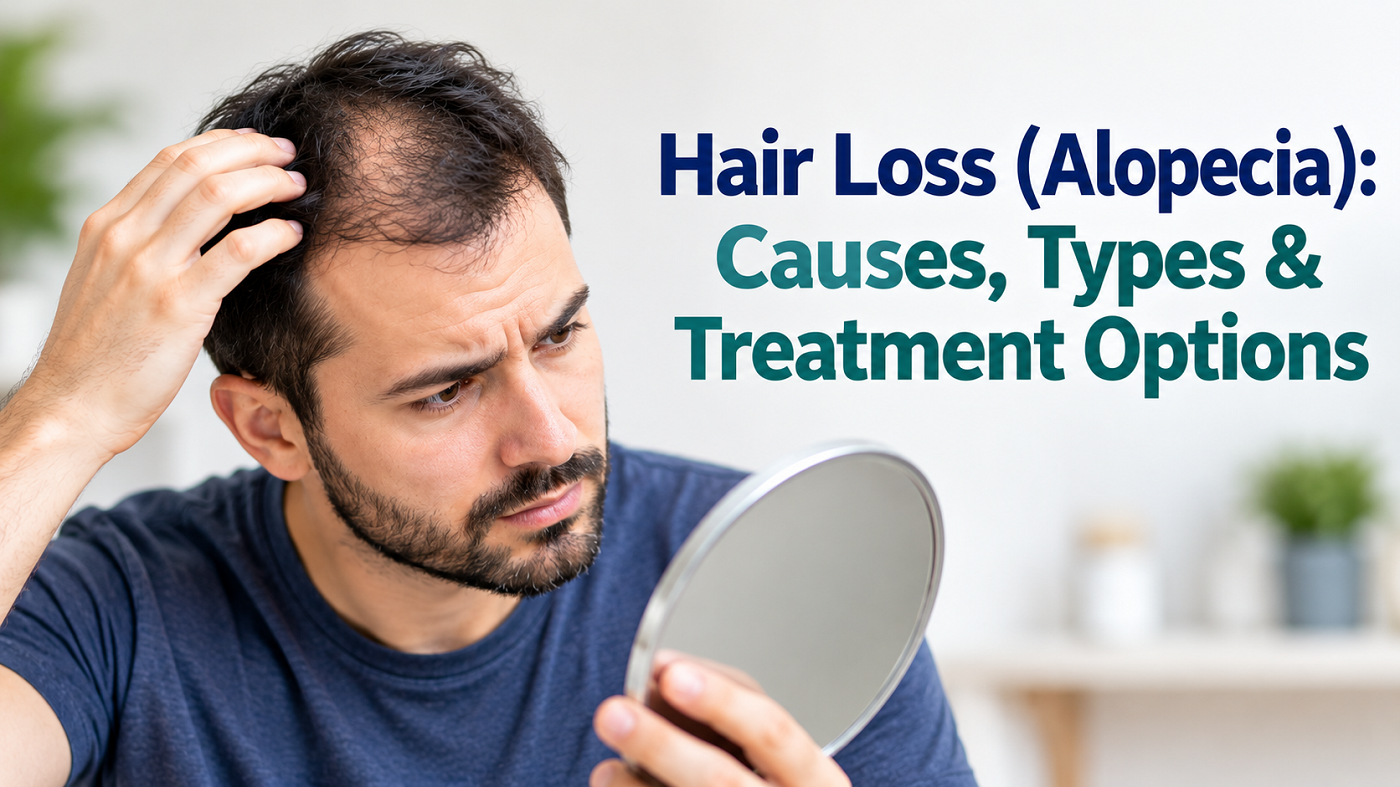
Have you ever rubbed the damp strands of your hair following a shower? Once you do, the realization hits harder than anything. The amount of hair that has come out with it to fill you with absolute dread? This makes you question about the hair loss causes and treatments available.
But, also have you sometimes found yourself staring at the old pictures wondering where your full head of hair has gone? If yes, then do not despair because you are not alone. Understanding hair loss causes and treatment is essential to take your life back.
What is Hair Loss or Alopecia?
Alopecia, as it is known, is the medical term for hair loss which is pretty common everywhere. It is treatable and controllable as long as you know what the underlying hair loss causes are.
What Are The Main Causes of Hair Loss?
It is perfectly normal to shed between 50 to 100 strands of hair a day. However, when large patches or tufts of hair begin coming out, it a serious thing. If you see more of your scalp than usual, it is time to look for the underlying hair loss causes.
Common hair loss causes include:
- Genetics
If baldness or thinning runs in your family, you have an increased chance of experiencing it yourself.
- Hormonal imbalance
This happens especially during pregnancy or menopause. A woman’s hormones take a turn for the worse, affecting her hair. Boys are less affected by hormonal imbalances.
- Autoimmune diseases
Sometimes, the body’s immune system begins attacking the hair follicles, resulting in hair loss.
- Stress
Excessive stress and anxiety can cause a condition called telogen effluvium. In this condition, the hair follicles that would otherwise grow hair, go into a resting phase.
- Nutritional deficiency
One of the major reasons for hair loss is lack of nutrients in body. Some of the nutrients are zinc, iron, and vitamin D and Vitamin B12. They can lead to weak, dull and damaged hair and hair loss.
- Medication
Certain drugs such as chemotherapy medication, can induce hair loss as a side effect.
- Tight hairstyles
Braids, ponytails, and extensions can sometimes damage hair follicles and lead to patches of baldness.
What Vitamin Deficieny Triggers Hair Loss?
This seems to be the most commonly asked question about hair loss.
- Lack of Iron, particularly, is one of the biggest reasons hair loss occurs, especially in women.
- The other important vitamins/minerals that if deficient can lead to hair loss are vitamin D, vitamin B12, zinc, and protein.
- Getting a blood test done can help you identify the vitamin deficiency. Only after which a supplement could restore your hair’s health.
Different Types of Alopecia
Did you know alopecia is not simply hair loss? There are different types of hair loss condition that people suffer from. Let’s have a look.
| Type of Alopecia | Description |
|---|---|
| Androgenic alopecia | Androgenic alopecia, also called male or female pattern baldness, is the most common type of alopecia. Bald spots on the scalp are the most obvious sign of this type of hair loss. |
| Alopecia areata | Alopecia areata appears in round patches of baldness on the scalp. It is sometimes even the eyebrows, eyelashes, and beard. This form of alopecia occurs when the body’s immune system malfunctions and attacks the hair follicles. |
| Telogen effluvium | Telogen effluvium is a type of hair loss that results from stress, illness, and hormonal imbalance.It is a temporary condition, however, and hair grows back within a few months of the causative factor ceasing. |
| Traction alopecia | Traction alopecia occurs due to the pulling of the hair in tight styles such as braids. It is a permanent form of baldness, but if caught early enough, it can be reversed. |
| Scarring alopecia | Scarring alopecia, also called alopecia seborrhoea, is a rare form of alopecia that causes permanent baldness. In this condition, the hair follicles become inflamed and irreversibly damaged, leading to patches of baldness. |
Dermat Approved Hair Loss Treatments That Actually Work
Once a person has understood what the hair loss causes are, they can begin to look for a suitable treatment. The most effective hair loss treatment options that even dermatologists swear by are:
- Minoxidil
This is a topical solution that helps stimulate hair follicles.
- Finasteride
This oral medication prevents the production of the hormone that causes baldness in men.
- PRP therapy
This procedure sees the patient’s platelets being extracted and reinjected into the scalp to stimulate new hair growth.
- Low-level laser therapy
Laser therapy helps stimulate the hair follicles and encourage new hair growth.
- Microneedling
This procedure helps other hair loss treatment topicals get absorbed into the scalp more easily.
- Hair transplant
This surgical procedure helps the person with baldness permanently get new hair follicles implanted into their scalp. This is considered a long-term solution.
- Steroid injection
This procedure helps the body stop attacking hair follicles and is recommended for people with alopecia areata.
A doctor can help you determine which hair loss treatment options are best suited to your needs.
Natural Remedies For Hair Loss – Home Remedies for Hair Growth
Along with the medical treatments, there are a number of things that a person can do at home to help their condition.
- Diet – Eating a healthy diet high in protein, iron, and leafy green vegetables can help restore lost nutrients.
- Scalp massage – Massaging the scalp for a few minutes a day can help stimulate blood circulation in the area.
- Targeted Scalp Serum for Hair fall – Use a hair re-growth serum for healthy hair or scalp serum for hair loss. It works magically for hair problems.
- Using a good shampoo – A poor quality, sulfated shampoo can do more harm than good. Using a good quality, herbal shampoo is a better alternative.
- Limiting stress – Stress is a known baldness inducer, so it is important to find ways of limiting it.
- Limiting heat styling – Using hot irons and curling iron can damage the hair.
- Using oils – Oils such as castor oil and coconut oil can help nourish the hair and strengthen it from within.
- Getting enough sleep – Getting too little sleep can affect the production of certain hormones.
- Avoiding extreme diets – Crash dieting can deprive the hair of the minerals and vitamins it needs to grow.
These natural hair loss treatment options can go a long way in helping the scalp and hair regain its health.
Also Read: Salicylic Acid vs Glycolic Acid: Which is Better?
How to Stop Hair Loss At Home?
While there is not much one can do about genetic problems, there are a number of things that can be done to prevent baldness or thinning. These prevention measures to combat hair loss include:
- Limiting stress
- Keeping the scalp protected against the sun
- Having a healthy diet
- Limiting the use of tight hairstyles and chemical treatments
- Avoiding smoking
- Keeping an eye on vitamin levels
- Seeing a doctor if baldness runs in the family or if you begin experiencing bald patches.
When To Consult A Dermatologist for Hair Fall?
You must see a doctor if –
- you are experiencing sudden hair loss or baldness that has appeared overnight or within a matter of days.
- If the baldness is patchy or you have been experiencing it for more than a few months, you must consult a professional.
- In addition, if you experience itchiness or inflamed scalps, it is best to visit a dermatologist.
- The same goes if you experience other symptoms in addition to hair loss.
Final Thoughts
Hair loss can be an upsetting experience for anyone. However, it is important to remember that it is pretty normal and common across the world. It is not uncommon and you are definitely not alone. Understanding hair loss causes and treatment is the first step to tackling it.
If you opt for any of the above mentioned medical hair loss treatments, it is important to consult a doctor. Also keep in mind that hair loss treatment timelines can be lengthy, so it is important to be patient.
Likewise, any changes you make to your lifestyle or diet in accordance with medical treatments will take time. So, give your hair some time to show results. The best way is to use a power-packed hair growth serum. It really assists in hair growth and combats hair loss.
FAQs about Hair Loss (Alopecia)
- Can I grow my hair back from alopecia?
You can regrow your hair from alopecia but it majorly depends on the condition and it’s intensity. A doctor might help in this case.
- What is the best treatment for alopecia hair loss?
The best treatment for alopecia is to consult a doctor and understand the severity of the condition.
However, if you have normal hairfall or hair loss then try home remedies.
- How to stop hair loss and regrow hair naturally?
The best effective remedy to stop hair loss is to reduce stress, adjust your diet and keep your scalp clean and healthy. Other than this try natural hair growth remedies to regrow hair. Try these ways to regrow hair.
- Use a hair growth oil.
- Try aloe vera gel with onion juice for hair growth.
- Indulge in relaxing scalp massages.
- Eat protein rich diet.
- Snack on seeds like flax seeds and pumpkin seeds to combat vitamin deficiency.
- Which vitamin deficiency causes hair loss?
The deficiency of Vitamin D, B12, Biotin (Vitamin B7), and mineral iron triggers hair loss.
- How to stop hair loss in females?
To stop hair loss in females, eat nutritious diet, follow a haircare routine and check your vitals. Make sure to use a hair growth serum to boost the process.
- Which hormone causes hair loss in females?
The DHT hormone is mainly responsible for hair loss in females. Other hormones that contribute in hair fall are thyroid hormones, cortisol and estrogen.
